
Love Is Not the End All Be All, and We Need to Stop Treating It Like It Is

By Shirl Hubbard
We need to stop treating “what’s your love language” like it’s the most important question in our relationships, because it’s not. We have built entire conversations around love as if it is the highest form of care, as if once love is present everything else will naturally fall into place, and that simply has not proven to be true. There are too many people who are deeply loved and still feel unsupported, overwhelmed, and like they’re carrying everything by themselves, and over time that disconnect starts to impact their mental and emotional wellbeing. The problem is not that love is absent. The problem is that we have been taught to center love while overlooking the very thing that determines whether love can actually be felt, which is support. Love, by itself, does not hold you. It does not ensure that your needs are noticed, understood, or met. And yet we continue to treat it as if it does, which is why so many people are sitting in relationships across friendships, families, and communities where love is present, but something still feels off.
What feels off is the absence of support.
You can love someone and still not feel supported by them, and over time that disconnect does not sit quietly in the background, it wears on you. You become the one everyone leans on, the one people call when they need to fall apart, while you’re trying to figure out where you’re supposed to go with everything you’re holding. You’re checking in on everyone else, carrying conversations, emotions, and responsibilities, and then realizing there is no one showing up for you in the same way. You are loved but still going to bed holding things in your body you don’t have a place to put, and over time that shows up as anxiety, emotional fatigue, and a nervous system that never fully settles.And because love is there, you question yourself instead of questioning the dynamic. You tell yourself this is just how relationships work and that as long as love is present, you should be grateful, no matter where it’s coming from, so you adjust, asking for less and carrying more.
But love was never meant to stand on its own like that.
Before we ever learned how to talk about love, we experienced something more foundational. We experienced support. In the womb, you were sustained without effort, every need met before you could name it, held in a way that required nothing from you.
That support created safety, teaching your body without language that it was okay to exist and not be on guard. From that safety, attachment formed naturally, not because it was demanded or earned, but because you were consistently held. Only after that does love come into the picture.
Support, then safety, then attachment, and then love. That is the order, whether we acknowledge it or not.
But we reversed it.
We have been taught to start with love, to prioritize love, while skipping over the very things that make love feel real in the body. As a result, we accept love that does not support us, love that does not create safety, love that does not foster secure attachment, and then we struggle to understand why something still does not feel right.
Your body knows the difference.
You can be deeply loved and still feel like you have to carry yourself through everything, still not feel safe enough to soften, still not feel held. That is not a contradiction. That is a signal. And instead of listening to that signal, we adjust. We make ourselves easier to love, we need less, we say less, and we carry more, because somewhere along the way we learned that love was the goal, even if it did not come with the support we actually needed.
But love is not designed to do what support does.
Support is what makes love sustainable. It is what creates the safety that allows you to exhale, what allows you to be seen without having to break down first, what makes room for your needs without turning them into a problem. It returns you to that original knowing in your body that you are allowed to be held without having to earn it. And when that is absent, you don’t stop loving. You start overcompensating. You become the one who fills in the gaps, keeps everything steady, and carries both your own weight and the weight of the relationship itself. Over time, that kind of love will wear you down, because you were never meant to carry on your own what was never meant to be carried alone.
So no, love is not the end all be all.
Support is.
Support is what makes love something you can actually live inside of instead of something you have to maintain, because without it you’re not just struggling in your relationships, you’re functioning in a constant state of depletion. And until we start centering support the way we’ve been taught to center love, we will continue to mistake being loved for being held. Those are not the same thing. So the question is not simply whether love is present. The question is whether you feel supported, whether you feel safe, and whether you are still holding yourself in spaces that are supposed to be holding you.
About Shirl Hubbard:
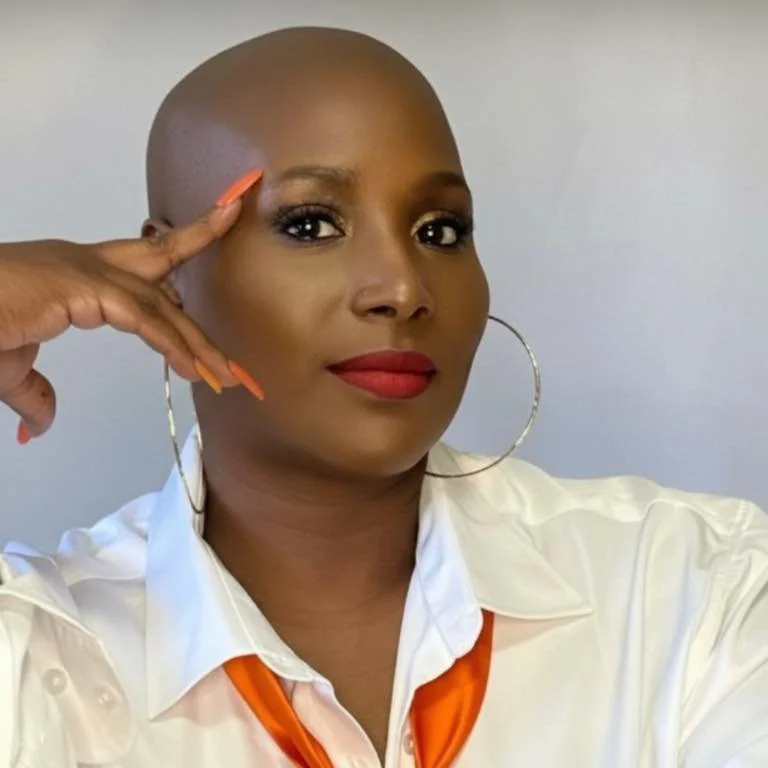
Shirl Hubbard is the Founder of Shades of Strong®, a platform and podcast centered on support for Black women through honest conversation, reflection, and lived experience. She is also the creator of the Support Languages™ framework, a tool designed to help Black women understand and name the kind of support they actually need. Through her work, she explores what it means to move from carrying everything alone to being supported in ways that feel real. You can take the Support Languages™ assessment at: https://shadesofstrong.com/supportlanguages/