
I Was Chasing Silence. Connection Was the Answer.
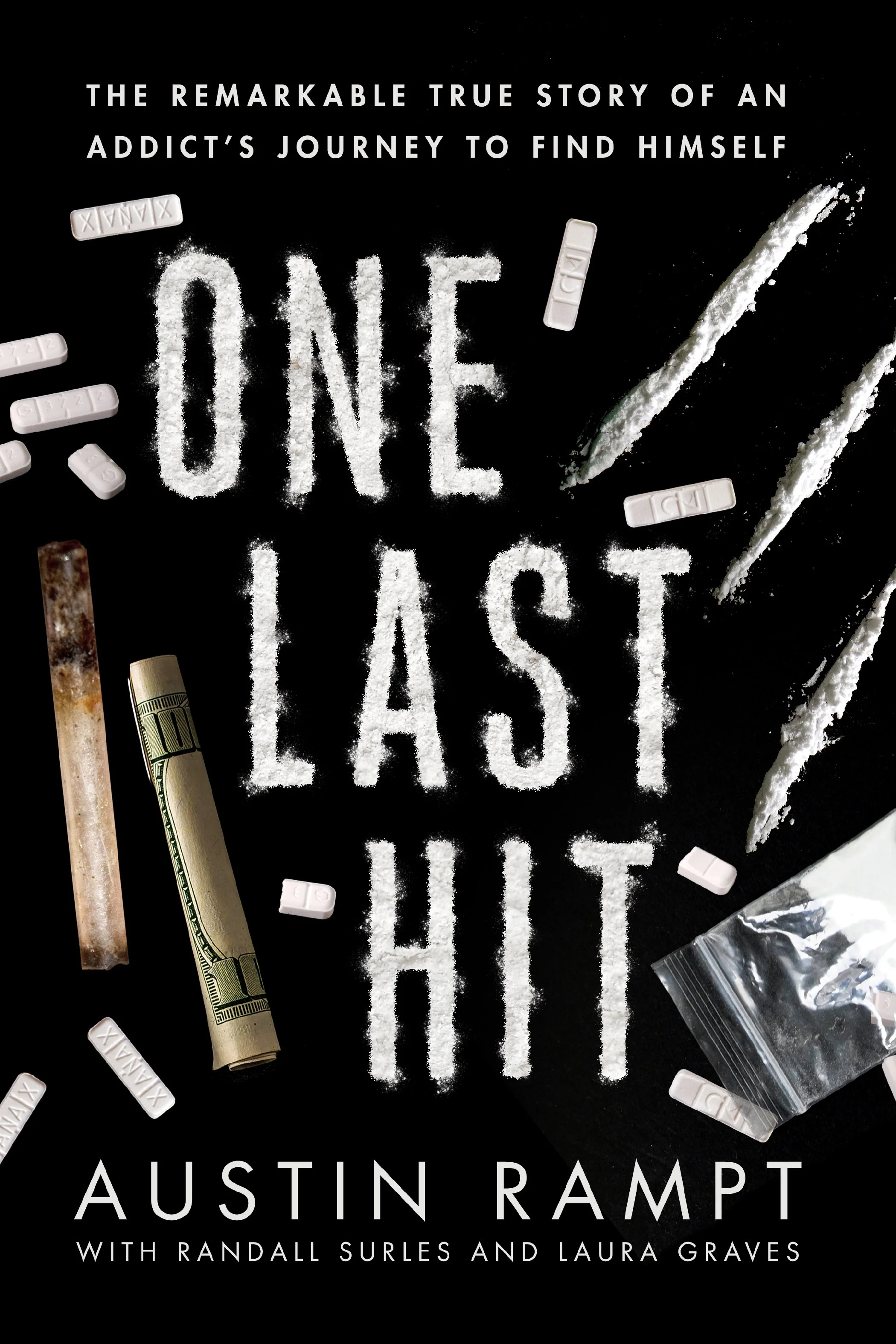
By Austin Rampt, author of One Last Hit
I was twelve years old and I couldn't stop making dolphin noises in class.
Not on purpose. Just these involuntary sounds that would fly out of my mouth in the middle of class while everyone stared. My hands would jerk. I'd blink hard, over and over. It was relentless and I felt powerless to control it.
I had just moved back to Tampa from four years in Tokyo, where I was already the overweight, twitchy American kid. Now I was back home and still couldn't blend in.
Nobody said the word Tourette's or TICs but I knew I was broken. I felt the shame of that. Nobody said anything helpful at all. What I felt, constantly, was this low-grade static. Like a radio stuck between stations. Loud. Exhausting. Nonstop.
The first time I drank, I was at a friend's garage. I was thirteen, a child ingesting alcohol. I remember it felt like passing under an overpass in a rainstorm. You know that moment when you drive under one and suddenly the noise just stops? The drumming on the roof goes quiet. Everything goes quiet.
That was it. That was what I had been missing.
I spent the next twenty-something years chasing that feeling.
The problem is the silence is fleeting. That's the trap I didn't know was waiting for me. The first drink gave me peace. The second is chasing the first. By the time I was smoking crack in a Mexico City apartment, I was barely even getting high anymore. I just wanted to feel a glimpse of that peace. Just one more time.
I went through eight rehabs. I had a heart attack at twenty-one. I flew to Cancun to outrun a court-mandated treatment order, landed with about five hundred thousand dollars in savings, and burned through it in a couple of years buying drugs from people connected to the Sinaloa Cartel. I was nearly kidnapped for ransom on an island off the Mexican coast. I sat across from a drug dealer all night while he held a loaded pistol in his lap because I had accidentally offended his Rottweiler at a party (True Story).
None of that got me sober. None of it even scared me sober.
Here is the key to addiction: the substance was never really the point. The point was silence. The point was relief from whatever was screaming inside. For me that was the tics, the anxiety, the loneliness of never quite fitting in anywhere. The drug was just the fastest route there.
So rehab kept trying to remove the drug. And I kept finding another route to the same place.
What actually changed things had nothing to do with a program or a pill or a solgan. It was people.
There was a woman in Mexico City named Sofia. She lived in a one-room apartment, boiled water on the stove so I could have a warm shower, and paid less than a hundred dollars a month in rent. She had almost nothing by any material measure. She was the happiest person I had ever met. I watched her cook, and laugh, and move through her day completely unbothered by all the things she didn't have. I couldn’t understand it.
I didn't get it then. I was still using. But something got filed away for later.
There was my daughter Madi. She posted a Happy Father's Day photo holding a sign while I was in Mexico. I saw it on social media from across an ocean I had put between us. That photo did something to me that no intervention or doctor ever managed.
There was my son Zachary. When I finally came home and visited my kids, Zachary said "Daddy." First words I ever heard him say. I missed his first everything. That hit a place in me no drug had ever reached.
There was Nate, my best friend from my last rehab. A guy from North Carolina who was brutally honest with me at a time when I had mastered the art of lying to everyone, including myself. He showed me what it looked like to actually be present with another person. Not performing sobriety. Actually showing up.
Nate died of an overdose on June 12, 2021. He was twenty-seven. I got the call while I was at a restaurant with my wife Haley.
I think about Nate all the time. And I think about what he showed me before he was gone: that the thing I had been trying to get from drugs was something only another person could actually give you.
Johann Hari has this line that gets quoted a lot in recovery circles: the opposite of addiction is connection. I didn't read that in a book and get better. I lived it over about a decade of losing everything. But he's right.
The silence I was chasing with alcohol at thirteen was just peace. It was the feeling of being seen and not being alone. That static in my head wasn't just Tourette's. It was a kid who needed someone to sit with him and say, you're okay, you belong here, you're not too much.
Drugs gave me a chemical version of that for about twenty minutes at a time. They hotwired connection. Real connection gives you something that doesn't wear off. But the problem was on the one hand I desired connection, but the path to it required vulnerability. I was certain that if I showed you who I was you would leave.
I was wrong. Those first courageous risks to present a genuine version of myself was the beginning of my healing.
If you're reading this and you're in it right now, whatever your version of "it" is, I'm not going to tell you to get help. The help I got barely worked. I'm going to tell you this instead: find one person you can be fully honest with. Not a therapist if you hate therapy. Not a meeting if meetings aren't your thing. Just one person who gets to hear the real version. Because the static doesn't stop until someone else knows you're in it.
That's what finally turned down the noise for me.
Not a program. Not rock bottom. A person.
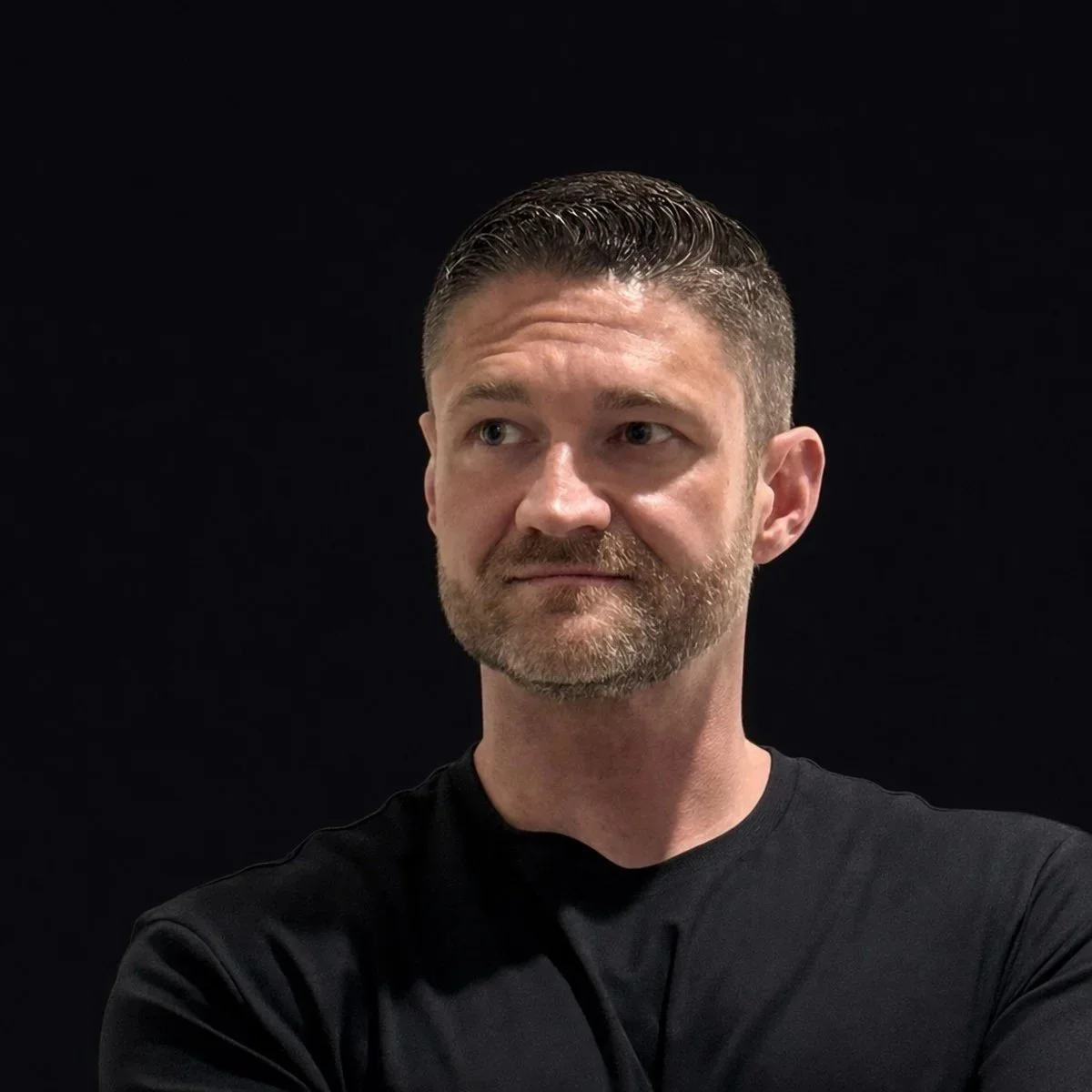
About Austin Rampt:
Austin Rampt is the author of One Last Hit, a raw and unflinching memoir about his decades-long battle with addiction and his remarkable journey back to himself. His story spans gang involvement, relapse after nearly a decade of sobriety, rock bottom moments most people don't survive, and the long road to recovery. Austin's mission is simple: to show others that no matter how far gone they think they are, there is always a way back.
Today Austin is a successful entrepreneur father of 5 and host of the One Last Hit Podcast, where he sits down with guests who have faced their own battles with addiction, trauma, and transformation. The show is built on the belief that vulnerability is strength and that every survivor has a story worth telling. With a rapidly growing audience and a community of listeners who show up to feel less alone, Austin continues to probe in what makes us, as addicts and alcoholics, tick.
One Last Hit is available on Amazon and Audible. Austin speaks on addiction recovery, entrepreneurship, resilience, and rebuilding identity after loss.
Learn more and get the book at onelasthitbook.com
https://www.instagram.com/onelasthitbook
https://www.facebook.com/onelasthitbook
https://www.tiktok.com/@onelasthitbook
and subscribe to the podcast on Spotify and Apple Podcasts.
YouTube: https://www.youtube.com/@OneLastHit
Podcast: https://onelasthitbook.com/podcast
Ebook: https://shop.onelasthitbook.com/product/ebook/
Audiobook: https://shop.onelasthitbook.com/product/audiobook/
Paperback: https://shop.onelasthitbook.com/product/one-last-hit-paperback/
SobrietyTalk Podcast Directory: https://sobrietytalk.com