
Mental Health Conundrum: Sankofa Thought: Racial Trauma, History, Self-Knowledge
By: Brother KD Toon
Dr. Amos Wilson, an African-centered psychologist who produced seminal literary research on psychological and psychosocial realities of Black people, addressed a crowd in 1998 with an eerie statement, “We’ve never escaped slavery”. One can only imagine how this critical insight perplexed the audience 133 years removed from the Emancipation Proclamation. Fast forward to the 21st century, where discourse and intergenerational lived realities reveal the emotional scars and wounds that derive from the institution of chattel enslavement of African captives as racial trauma – an insight echoed by historians of the African diaspora, social scientists, mental health researchers, and professionals from different ethnic and racial backgrounds.
Second to none, the lingering effects of racial trauma stemming from systemic racism and racial discrimination, foreshadowed by Dr. Amos Wilson, have been systemically injected into the critical consciousness, family systems, and psychosocial processes of downtrodden Black- identifying descendants of institutional oppression. Over time, race-based traumatic stress (also known as racial trauma or RBTS) dramatically affects the mental health, physical health, personhood development, and mortality rate of Black-identifying Americans at an astounding rate. Racial trauma is a silent, deadly, destructive phenomenon that deserves proper acknowledgment, recognition, research, and resources to confront the U.S. legacy of historical trauma, anti-Black violence, economic exploitation, and racial discrimination. It can also be referred to as what Dr. Wade Nobles (1986) described as the Spirit-Damage of communal- ancestral oneness and consciousness.
The Maafa, commonly referred to as the African Holocaust or great disaster, symbolizes a rupture in the continuity of the ways, means, and processes of cultural continuity with oneself and the indigenous ancestors. Everything from language to customs, cosmologies, rituals and traditions, social organization, beliefs and attitudes, and nuanced socialization practices was disrupted – and consequently infringed upon by mentacide (Wright, 1994): the deliberate and systemic process of psychological destruction and erasure. Thus, the birth and perpetuation of the ideology of White Supremacy. Marimba Ani (1997) elaborates on the rationale for the development and maintenance of White Supremacy through Black dehumanization:
Their ideology dictated that they create inferior objects in order for their self-concepts to function positively within the context of their value system. (p.13)
The interiorization of Black humanity, life, and devastatingly influenced the worldview system, conceptual universe, perceptions, and behaviors of African captives and their descendants. Through further analysis, Marima Ani (1997) explains the outcomes of disrupting and rupturing the cultural frameworks of the African way of life:
The system and circumstances of slavery in New Europe sought to destroy African value, African self-image and self-concept. The African universe was disrupted. It became dysfunctional as the sense of order that it offered dissolved. For the overwhelming majority of those bought to North America and their descendants, the benefits of African culture were stripped away – not one by one – but brutally, in one sudden and total act. Family, language, kinship patterns, food, dress and formalized religion were gone. What replaced them was the order of slavery. (p.13)
The destruction of ancestral memory, knowledge, and wisdom over generations manifests as thisintense, profound, enduring psychological, emotional, spiritual, communal, and familial legacy of pain and suffering. It is a multigenerational wounding that impacts agency, image, pride, coping with reality, and social relations, all of which are necessary for the perpetuation of an empowering and dignified sense of self. Dr. Joy DeGruy (2005) refers to this multigenerational trauma as Post Traumatic Slave Syndrome, which can be further defined as:
A condition that exists when a population has experienced multigenerational trauma resulting from centuries of slavery and continues to experience oppression and institutionalized racism today. Added to this condition is a belief (real or imagined) that the benefits of society in which they live are not accessible to them. (p.101)
Beyond the atrocities and systemic oppression related to the institution of human trafficking and exploitation of African captives, the historical context of racial terror lynchings, coupled with Black mass incarceration and police brutality, added to chronic stress, anxiety, paranoia, contributing to the chain of disintegration within communities, families, and individual personhood. The Equal Justice Initiative reports approximately 4,400 documented anti-Black lynchings from 1877 to 1950. The cycle of never-ending racial genocide perpetuated by European capitalistic greed haunted freedmen, the emancipated, and their descendants for close to a century after the 1865 emancipation proclamation. Presently, Black people who struggle with poverty, mental illness, substance abuse, homelessness, and overrepresentation in the criminal legal system are inhabitants of the same communities that were once breeding grounds for racial terrorism.
Racial trauma or multigenerational victims of Post Traumatic Slave Syndrome experience similar symptoms to those battling with the emotional, behavioral, and psychological manifestations of PTSD. The crucial distinction between RBTS and PTSD is the trauma-inducing source (not always a specific event or situation) and its multi-dimensional impact on self, family, community, and cultural identity. The prolonged exposure to race-based mistreatment, stress, and various forms of racism can lead to a wide range of psychological and emotional challenges, with PTSD being a common clinical manifestation. Despite the similarities in symptomatology, RBTS affects more than just the individual. The source of racial trauma, whether directly- impacted, epigenetically transmitted, or vicarious, impacts more than just human functioning (e.g., personality, self-concept, relationships, etc.) – it adversely affects the nature and outcomes of political power, health equity, education, business and economics, and public health throughout Western civilization.
To be sure, there may be those who don’t believe that a cultural and ethnic group of people 400 years plus removed from the institution of chattel slavery and six to seven decades removed from racial terror lynchings throughout the 20th century, black codes, apartheid, and racial social policies used to achieve racial and social control could still feel the residual impacts of psychological stress and traumatization. It may even be hard to believe that racial trauma can extend beyond the African Diaspora to other marginalized and subjugated cultural identities. It has been proven through research that individual and systemic racism associated with direct traumatic and vicarious stressors impact descendants of the holocaust, victims of anti-Asian American violence, descendants of indigenous populations stripped of their resources, and Latinx communities overwhelmed by restrictive and unfair immigration policies and deportation practices. Racial trauma is not just a Black community concern – it is a prevalent issue for any racial and ethnic collective people historically and presently underserved, disenfranchised, culturally deprived, and economically and socially excluded.
Now is the time to galvanize and operationalize against systemic oppression – the producer of racism and racial discrimination – and the perennial disease causing mentacide, devastation, despair, and death within Black communities and other historically marginalized communities. It has been emphasized by Dr. Wade Nobles (1986) and Dr. Linda James Meyers (1992) that Eurocentric domination effects, impacts, and transcends physical brutality – an impregnable force indeed; it also makes its mark in the formulation of a conceptual universe from which a worldview emerges from philosophical underpinnings. The first step to what seems to be an elusive counterrevolution against de-colonialization is to reorient ourselves [back] to the ‘light’ of truth – the traditions of being, knowing, relating, and becoming uninterrupted by the imposition of Eurocentric and Western imperialism.
The foundational principle of “Man Know Thyself” is the Ancient Kemet (Egypt) system of knowledge, learning, education, and beingness (Conference, 1986; Na’im Akbar, 1998). We must embody the principle of mastering self-knowledge and discover the truth of our origins, history, culture, and heritage to achieve the absolute erasure of all residual effects of perennial miseducation and cultural misorientation. Remember that racial trauma is a silent, deadly, and lethal threat to humanity and morality – not just people with highly melanated skin. The more we confront the legacy of racism and white supremacy and elevate the voices of lost souls erased from national consciousness; the less American society can hide behind the veil of denial, avoidance, and complicity.
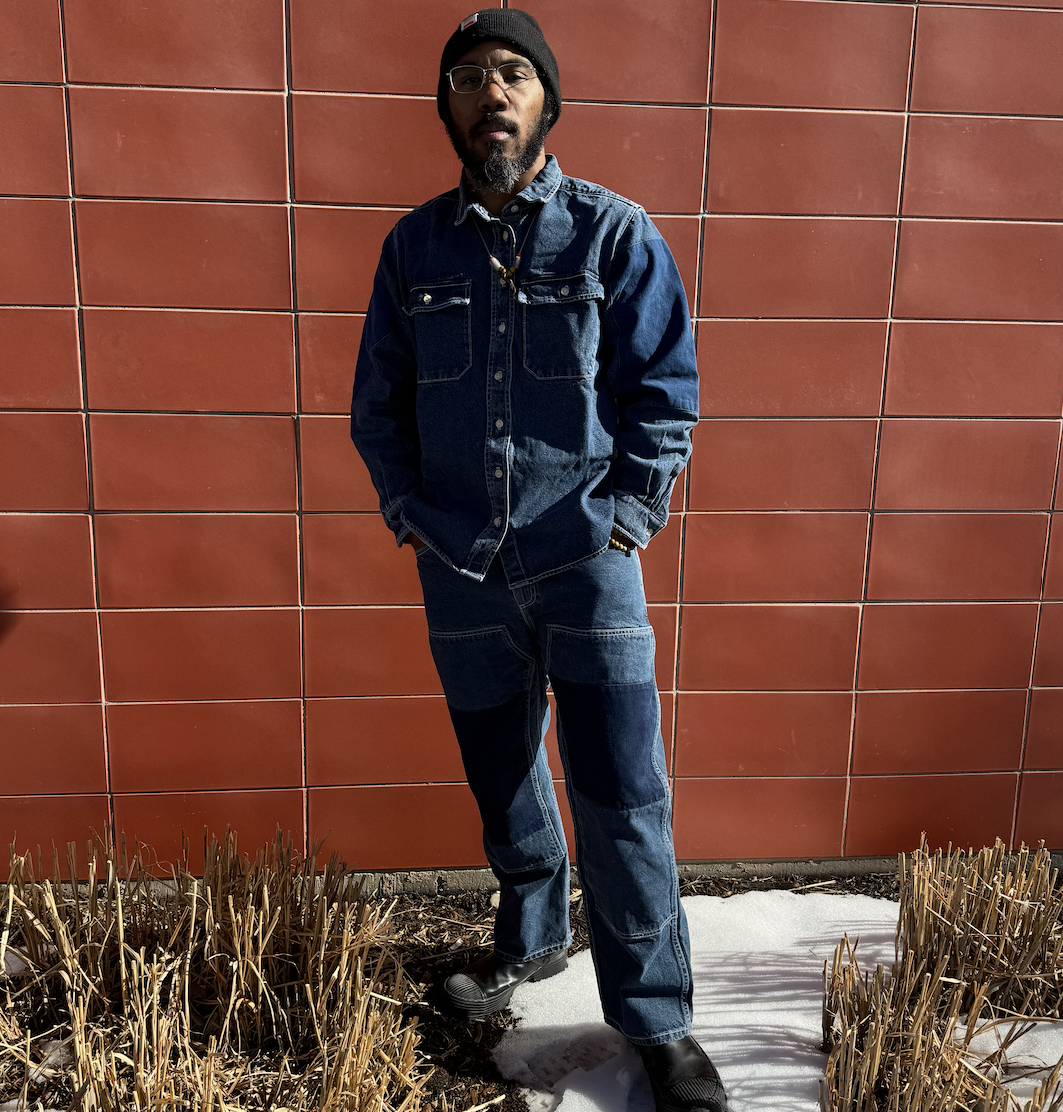
Brother KD Toon
A father, husband, an Afrocentric cultural scholar, and a master of social work, applies an interdisciplinary focus to liberation studies that center on an African-centered worldview, history, culture, and experience. As a descendant of African ancestry in the diaspora, KD's lifelong dedication is to illuminate, restore, reclaim, and revitalize the African mind and spirit. Currently, KD is continually developing and refining the Liberation Social Work™ framework for Personhood development through pedagogy.
References
Ani, M. (1997). Let the Circle be Unbroken. Conference, A. F. T. S. O. C. a. C. (1986). Kemet and the African Worldview: Research, Rescue and Restoration.
Myers, L. J. (1992). Understanding an Afrocentric World View.
Naim Akbar. (1998). Know thy self. Mind Productions & Associates.
Nobles, W. W. & Institute For The Advanced Study Of Black Family Life And Culture.
(1986). African psychology : toward its reclamation, reascension & revitalization. Institute For The Advanced Study Of Black Family Life And Culture.
Joy Degruy Leary. (2005). Post traumatic slave syndrome : America’s legacy of enduring injury and healing. Joy Degruy Publications Inc.
Wright, B. E. (1994). The Psychopathic Racial Personality and Other Essays. THIRD WORLD Press. Baltimore, Maryland Afrikan World Press.